The client is a leading automotive manufacturer with operations across multiple manufacturing plants, regional offices, dealerships, and an extensive supplier ecosystem. The organisation employs thousands of people across production, quality, sales, after-sales service, and partner networks – a structure typical of Indian OEMs and Tier 1/Tier 2 suppliers, where training has to reach three very different audiences at once: employees, dealer networks, and supplier partners who don’t sit on the internal HRMS.
With frequent vehicle launches, evolving manufacturing processes, stringent quality standards, and changing compliance requirements, the company needed a centralised LMS built for the automotive value chain rather than a generic employee training tool retrofitted for dealers and suppliers.
Challenge: Standardising Training Across Plants, Dealers and Suppliers
Managing learning across manufacturing plants, dealerships, service centers, and supplier networks had become increasingly complex. Production teams required regular SOP, safety, and quality training. Dealer sales teams needed timely product knowledge before every vehicle launch – a narrow window where being unprepared has a direct, measurable cost in lost sales. Service technicians had to stay updated with diagnostic procedures, repair techniques, and warranty processes. Supplier partners were expected to complete mandatory quality and compliance certifications to meet OEM standards, despite sitting entirely outside the manufacturer’s own HR systems.
Most training was delivered through classroom sessions, presentations, emails, or local trainers – leading to inconsistent learning experiences, limited visibility into training progress, and higher operational costs. The L&D team faced inconsistent training delivery across plants, dealerships, and supplier locations; slow onboarding of new employees and dealer staff; limited visibility into course completion and certification status; high travel, venue, and instructor costs for recurring training; difficulty tracking mandatory compliance, quality, and safety certifications; no centralised reporting for audits or management reviews; and repeated delays in preparing dealer networks for new vehicle launches.
The organisation needed a scalable platform that could standardise training while still delivering role-specific learning experiences across a genuinely distributed workforce – including partners who are not employees at all.
Solution: One Platform for OEM Employees, Dealers and Suppliers
The company implemented AlphaLearn LMS as a centralised learning platform for employees, dealerships, suppliers, and channel partners. Customised learning journeys ensured every learner received relevant training based on their role, department, and business function.
Role-based learning paths were created for production operators, quality engineers, supervisors, sales consultants, dealership managers, service technicians, and supplier partners, ensuring every learner accessed relevant content from day one.
Product launch readiness automatically assigned product knowledge modules, feature demonstrations, competitive comparisons, assessments, and certifications to dealer sales teams and service technicians before every vehicle or component launch – ensuring the entire network was launch-ready before products reached the market.
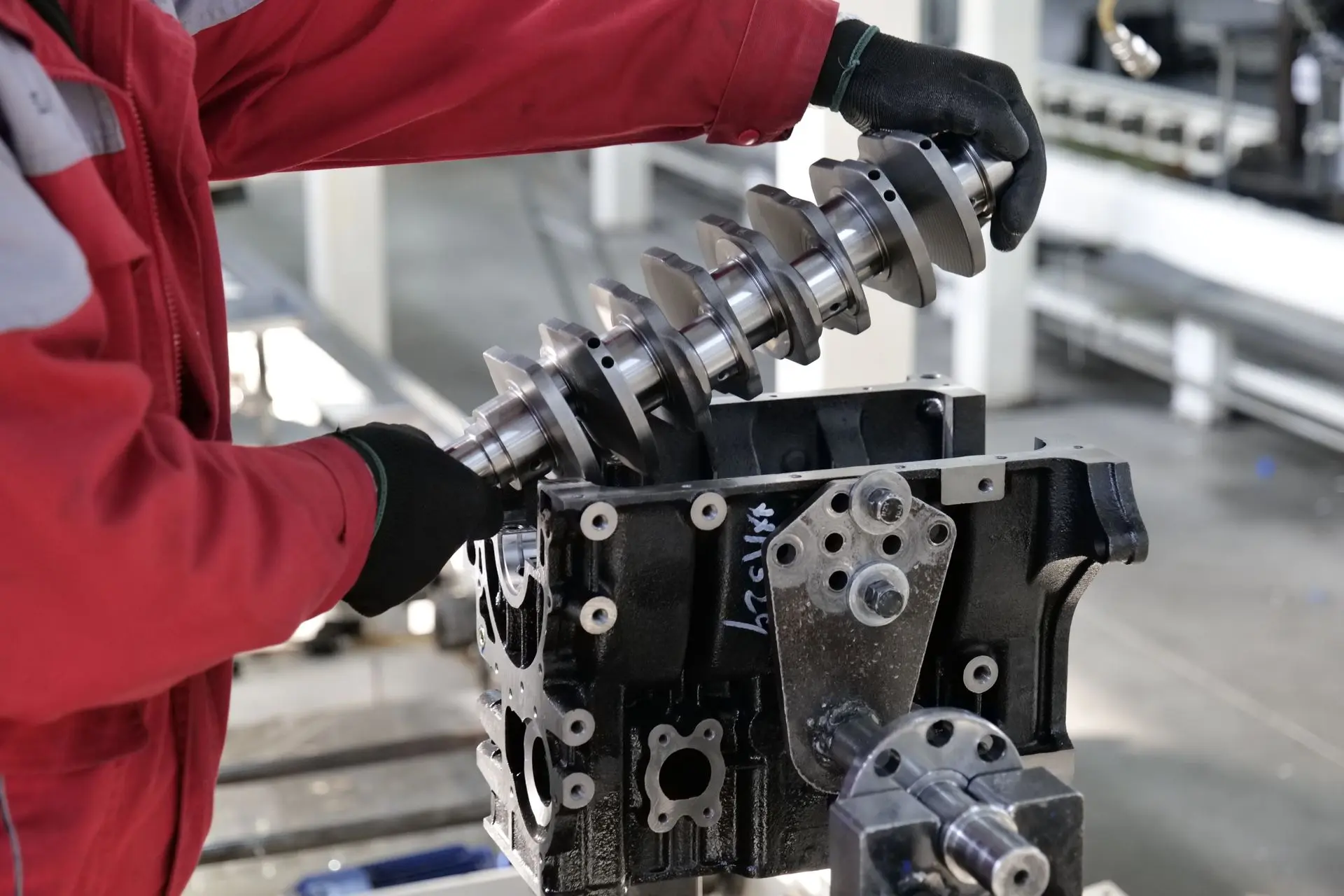
Manufacturing and SOP training gave plant employees standardised training on operating procedures, quality processes, machine handling, workplace safety, and continuous improvement initiatives through structured digital learning paths.
Supplier compliance let suppliers complete mandatory quality standards, process documentation, and compliance certifications digitally, in separate tenants outside the OEM’s core HRMS – helping maintain consistent quality benchmarks across the supply chain via AlphaLearn’s certification management capability, and see our partner training page for how dealer and supplier networks are managed at scale.
Mobile-first learning let employees, dealership staff, and suppliers complete bite-sized modules anytime, anywhere without disrupting daily operations, through AlphaLearn’s mobile app.
Assessments and certifications used knowledge assessments and automated certification workflows to verify learning outcomes before employees completed mandatory training programmes.
Analytics and reporting gave real-time dashboards with complete visibility into learner progress, certification status, assessment performance, and training compliance across manufacturing plants, dealerships, and supplier locations, powered by learning analytics.
Results: 91%+ Completion, 55% Lower Classroom Costs, 32% Fewer Training Errors
- Over 90% course completion rate across employees, dealers, and suppliers
- 55% reduction in classroom training costs
- 40% faster onboarding for employees and dealer staff
- 32% reduction in product and process-related training errors
- Compliance tracking centralised across all business units, with audit readiness improved through automated reporting and certifications
Beyond the measurable business outcomes, the organisation established a unified learning ecosystem where employees, dealers, and suppliers could access the latest training from a single platform. This improved knowledge consistency, accelerated product readiness, and strengthened operational excellence across the automotive value chain – whether onboarding a new production operator, certifying supplier personnel, preparing dealer sales teams for a vehicle launch, or upskilling service technicians on the latest repair procedures. See how AlphaLearn’s full feature set supports this kind of multi-tenant, multi-audience rollout, or explore compliance training for supplier and quality certification programmes.
Frequently Asked Questions: LMS for Automotive Training in India
How does an LMS help automotive OEMs train employees, dealers, and suppliers?
An automotive LMS delivers role-based digital learning to employees across manufacturing plants, dealerships, service centers, and supplier networks. Production teams receive SOP and safety training, dealers complete product and sales modules, service technicians access technical certifications, and suppliers undergo compliance training – all tracked through a centralised dashboard for complete visibility.
Can an LMS support new vehicle and product launch training?
Yes. AlphaLearn enables automotive companies to roll out product launch training quickly across dealer sales teams, service technicians, and regional managers. Interactive modules, videos, assessments, and certifications ensure everyone is equipped with the latest product knowledge before a vehicle or component reaches the market.
Can automotive suppliers be trained using the same LMS as employees?
Yes. Suppliers can be onboarded through dedicated learning paths covering quality standards, process documentation, compliance requirements, and OEM-specific guidelines – managed in separate tenants outside the manufacturer’s core HRMS, so certification requirements can be met before suppliers support manufacturing operations.
How does an LMS reduce training costs for automotive companies?
Digital learning reduces expenses associated with classroom sessions, trainer travel, printed materials, and recurring instructor-led programmes. Employees, dealers, and suppliers can complete training online at their convenience, making learning more scalable while minimising operational disruptions – this case study’s client achieved a 55% reduction in classroom training costs.
How does an LMS help with compliance and audit readiness in automotive manufacturing?
The platform automatically tracks mandatory training, certifications, assessments, and completion records. During audits, organisations can generate reports instantly, providing documented evidence of compliance with quality, safety, and regulatory training requirements across every plant and supplier location.
Can AlphaLearn integrate with existing HRMS or ERP systems used by automotive manufacturers?
Yes. AlphaLearn integrates with HRMS, ERP, Active Directory, and other enterprise applications to automate user provisioning, learning assignments, and reporting – reducing manual administrative effort across large, multi-plant organisations.