
India’s corporate training landscape is undergoing its most significant transformation in decades. Regulatory requirements are tightening – the DPDP Act 2023 is now enforceable, POSH obligations have expanded, and industry regulators from RBI to CDSCO are demanding documented training compliance. AI adoption is forcing rapid upskilling across every sector. And a workforce that spans five generations, 22 officially recognised languages, and an estimated 400 million frontline workers demands training approaches fundamentally different from what worked even three years ago. This guide covers the market data, key trends, sector-specific challenges, and what Indian L&D leaders are doing differently in 2026.
The Indian Corporate Training Market in 2026: Size and Growth
India’s corporate eLearning market is growing at approximately 15–18 percent annually, making it one of the fastest-growing segments of the global learning management system market, which reached $28.58 billion in 2025. Several structural factors are driving this growth simultaneously:
- Workforce demographics: India’s workforce of over 500 million has a median age of 28 – the youngest major economy globally. This generation expects digital-first, mobile-accessible, self-paced learning as a baseline, not a premium feature.
- Regulatory expansion: Mandatory training requirements grew significantly in 2023–2025. DPDP Act 2023, expanded POSH enforcement, and tightened norms from RBI, SEBI, IRDAI, and FSSAI have made compliance training a board-level priority rather than an HR checkbox.
- Remote and hybrid work permanence: Physical classroom training is no longer viable as the primary delivery method for organisations with distributed workforces. Cloud-based LMS platforms now account for 88 percent of new deployments in India.
- AI-driven content economics: The cost of creating high-quality digital training content has dropped by 60–70 percent with AI authoring tools. Organisations that previously lacked instructional design resources can now produce professional eLearning in-house.
- NASSCOM projections: India will need to retrain or upskill approximately 40–50 percent of its technology workforce by 2027 to remain competitive as AI and automation reshape roles across IT, BFSI, and manufacturing.
Top Corporate Training Trends in India for 2026
1. AI-Powered Learning Takes Centre Stage
AI has moved from feature checklist to core differentiator. Indian enterprises are deploying AI across four areas of the training lifecycle. First, personalised eLearning path generation: the system automatically assigns courses based on role, department, assessment scores, and individual skill gaps – eliminating the inefficiency of assigning identical training to employees with vastly different competency levels. Second, AI content creation: L&D teams generate draft courses, quiz questions, and scenario-based modules from topic descriptions in minutes rather than weeks. Third, AI-proctored exams: webcam monitoring detects anomalies during assessments, enabling high-integrity certification without physical invigilators – critical for pharmaceutical GMP certification, banking regulatory exams, and professional certifications. Fourth, predictive analytics: the system identifies disengaged employees by monitoring login patterns, module completion velocity, and assessment attempt frequency – allowing managers to intervene before an employee drops out entirely.
2. Compliance Training Becomes Non-Negotiable
Indian companies face an expanding web of mandatory training obligations in 2026. Understanding the specific requirements is essential for L&D planning:
| Regulation | Who it applies to | Training requirement | Penalty for non-compliance |
|---|---|---|---|
| POSH Act 2013 | All organisations with 10+ employees | Annual sexual harassment prevention training; ICC awareness | Up to ₹50,000; repeat offence can trigger licence cancellation |
| DPDP Act 2023 | All organisations processing personal data of Indian citizens | Data protection awareness for employees handling personal data | Up to ₹250 crore for significant data fiduciaries |
| RBI / SEBI / IRDAI | Banks, NBFCs, brokerages, insurance companies | AML/KYC, CKYC, FATCA, circular-specific training with audit trail | Regulatory action; licence suspension; financial penalties |
| Schedule M / GMP (CDSCO) | Pharmaceutical manufacturers | SOP training, GMP, pharmacovigilance; documented re-training on change | WHO audit failure; export licence suspension |
| Factories Act 1948 / BOCW Act | Manufacturing, construction | Safety induction, equipment operation, fire drill training | Fines + criminal liability for supervisors |
An employee training software with automated tracking, expiry alerts, and compliance-grade audit trails is the only practical way to manage this volume of regulatory training at enterprise scale. Manual tracking via spreadsheets fails audit inspections because it cannot prove training was completed before a specific regulatory deadline.
3. Mobile-First and Microlearning for Frontline Workers
An estimated 80 percent of India’s workforce is deskless – retail workers, factory floor operators, healthcare aides, delivery personnel, and field technicians. Traditional LMS platforms designed for desk-based knowledge workers fail this audience entirely. The defining trend of 2026 is mobile-first microlearning: focused training modules of 3–5 minutes designed for smartphone consumption during breaks or commutes.
For Indian organisations, this requires the LMS to meet specific technical benchmarks: seamless operation on mid-range Android devices (Redmi, Realme, Samsung M-series) running Android 10 and above; content that loads under 3G conditions at 1–5 Mbps; offline download capability that syncs completion data when connectivity resumes; and an app size under 50MB that workers are willing to keep on personal devices. These are not luxury requirements – they determine whether training reaches the 80 percent of your workforce that traditional platforms ignore. AlphaLearn’s mobile learning app is built specifically for this audience, with offline-first architecture and bandwidth optimisation for Indian network conditions.
4. Vernacular and Multi-Language Training
India has 22 officially recognised languages and hundreds of regional dialects. Training content that exists only in English excludes a substantial portion of the workforce – particularly in manufacturing, healthcare, retail, and hospitality, where the majority of employees are not English-first learners. Safety training delivered in a language workers do not fully understand is not just ineffective – it creates liability when accidents occur.
Leading organisations in 2026 are deploying LMS platforms that support Hindi, Tamil, Telugu, Kannada, Marathi, Bengali, Gujarati, Malayalam, Punjabi, and Odia as first-class delivery languages – not afterthought translations. The distinction matters: a word-for-word English-to-Hindi translation may be grammatically correct but contextually irrelevant if the original scenario uses workplace examples from a Western office environment. Effective vernacular training uses region-appropriate scenarios, culturally familiar visuals, and terminology that maps to how workers actually describe their work. AlphaLearn supports 12 Indian languages natively, enabling L&D teams to manage multi-language content versions from a single platform without duplicating courses manually.
5. Skills-Based Learning Replaces Job-Title Training
The shift from job-title-based training assignments to skills-based skills-based learning paths is accelerating. McKinsey Global Institute projects that 60 percent of the global workforce will require new or significantly updated skills by 2030. For Indian organisations, this is not a distant horizon – AI adoption in BFSI back-office operations, automation in manufacturing assembly, and generative AI tools in IT services are already making specific competencies obsolete within 18–24 months.
The practical approach: build a skills taxonomy for your organisation (typically 200–500 skills across departments), map each role to a required proficiency level for each skill, run AI-powered assessments to identify individual gaps, and automatically assign learning and development paths to close those gaps. LMS platforms with built-in competency mapping make this manageable at enterprise scale. The result is immediate: instead of assigning identical annual training to 5,000 employees regardless of their existing knowledge, only the relevant gap-closing courses are assigned – reducing training time by 30–40 percent while producing measurable competency improvements.
6. Blended Learning Replaces Pure eLearning
Fully digital training solves the distribution problem but creates engagement challenges. Pure eLearning completion rates at Indian enterprises average 60–70 percent without active reinforcement. The 2026 approach is blended learning: combining self-paced digital modules with live virtual instructor-led sessions via Zoom or Microsoft Teams, structured peer discussions, manager check-ins at defined milestones, and practical workplace assignments that apply learning to real job situations. An LMS that integrates Zoom and Teams natively – scheduling sessions, recording attendance, capturing feedback – removes the coordination overhead that makes blended programmes difficult to manage at scale.
Industry-Specific Corporate Training Challenges in India
BFSI: Regulatory Density and Audit Readiness
Banking, financial services, and insurance organisations face the highest regulatory training burden of any Indian sector. RBI’s master directions on KYC require documented annual training for all customer-facing staff. SEBI’s continuing education requirements apply to registered investment advisers and research analysts. IRDAI mandates regular training for agents and underwriters. AML training must be completed within 30 days of joining and refreshed annually. The compliance training challenge is not just delivering training – it is maintaining an audit trail that withstands regulator scrutiny. Every completion needs a timestamp, every assessment needs a score, every certificate needs an expiry date and re-enrolment trigger. AlphaLearn serves BFSI organisations including Sharekhan and Care Ratings with automated compliance workflows that generate regulator-ready reports on demand.
Pharmaceutical and Healthcare: GMP, GCP, and SOP Training
Schedule M GMP compliance requires that every employee who touches a manufacturing process is trained on the relevant SOP before performing that task – and retrained whenever the SOP changes. For a mid-size pharmaceutical plant with 500 SOPs and 800 employees, this creates a training management challenge that spreadsheets cannot solve. Each SOP version change triggers a re-training assignment for the relevant role group; completions must be documented before the new procedure takes effect; and WHO, US FDA, and EU GMP audits require instant access to training records by employee, by SOP, and by date range. AlphaLearn’s pharma LMS automates this workflow. KIMS Hospitals achieved a 60 percent reduction in training travel costs after moving clinical staff induction to digital delivery on AlphaLearn.
Manufacturing: Safety, SOPs, and Multilingual Frontline Training
Manufacturing organisations in India deal with three simultaneous training pressures. First, safety compliance under the Factories Act requires documented induction training before any worker begins on the production floor, regular refreshers, and emergency procedure drills. Second, quality system training for ISO 9001, IATF 16949 (automotive), and ISO 14001 requires all relevant employees to be trained and assessed on procedures. Third, workforce language diversity on the factory floor often spans four to six languages in a single facility. A manufacturing LMS case study from AlphaLearn showed 40 percent faster SOP and safety training delivery after switching from classroom to mobile-first digital delivery.
Retail and Hospitality: High Volume, High Turnover, Fast Onboarding
Retail organisations with 50–200 store locations face a constant employee onboarding challenge. Annual attrition in Indian retail runs 25–40 percent. Seasonal hiring for festive quarters adds another 20–30 percent temporary headcount that needs product knowledge and customer service training within days of joining. An LMS with automated onboarding workflows – triggered the moment an employee joins in the HRMS – eliminates the lag between hiring and productive deployment. A retail training case study from AlphaLearn documented 50 percent cost reduction in store and field team training after replacing regional classroom sessions with mobile-delivered microlearning.
IT and Software Services: Technical Upskilling at the Speed of Change
India’s IT sector faces a distinctive training challenge: the skills required change faster than traditional annual training cycles can accommodate. Cloud platform certifications (AWS, Azure, GCP) need structured preparation paths. Cybersecurity awareness training must reflect current threat vectors, not last year’s generic phishing slides. Generative AI tools (GitHub Copilot, Claude, Gemini) require practical competency training, not just awareness. And client onboarding training must be customised for each engagement’s specific security and process requirements. A training management system with rapid content update capability and certification tracking that integrates with HR systems is the infrastructure requirement for IT organisations that compete globally.
How to Build a Corporate Training Strategy for 2026
Organisations that approach corporate training strategically – rather than reactively deploying courses whenever a regulation changes – consistently outperform peers on both compliance outcomes and workforce capability metrics. A practical framework for 2026:
- Audit your current training coverage: Map every mandatory regulatory requirement to your industry and size. Identify gaps between what is required and what is currently tracked. This alone typically reveals 3–5 compliance risks that need immediate remediation.
- Build a skills taxonomy: Define the competencies required for each role family. Prioritise roles where skill gaps create the most business risk – customer-facing roles in BFSI, production floor roles in manufacturing, clinical roles in healthcare.
- Choose infrastructure before content: An LMS is the foundation that determines what is possible. Choosing the wrong platform – one that lacks offline capability, multi-language support, or compliance audit trails – limits everything built on it. Evaluate platforms against your specific requirements before investing in content.
- Design for the frontline first: If 80 percent of your workforce is deskless, design your training programme for smartphones and microlearning before designing for desktops and long-form courses. The majority audience should drive the design.
- Connect training data to business outcomes: Identify 2–3 operational metrics that training should move – error rates, customer satisfaction scores, attrition in the first 90 days. Build dashboards that show L&D leaders and business leaders these metrics alongside training completion data.
Proving Training ROI: What Indian L&D Leaders Are Measuring in 2026
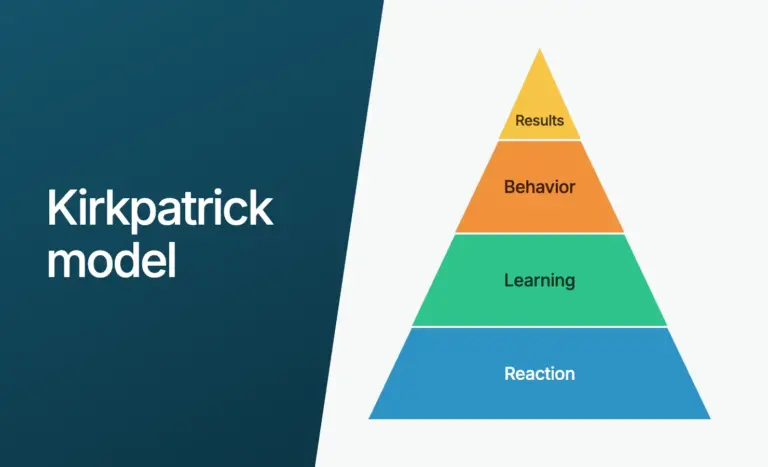
L&D budgets face increasing CFO scrutiny. Completion rates alone do not justify investment – they measure activity, not impact. Progressive Indian organisations are moving to a three-tier measurement model. Tier one is learning metrics: completion rates, assessment scores, knowledge retention measured by spaced repetition tests at 30, 60, and 90 days post-training. Tier two is behavioural metrics: manager-reported behaviour change, quality audit scores before and after training, and error rates on trained procedures. Tier three is business metrics: customer complaint rates for trained vs untrained cohorts, 90-day attrition for employees who completed onboarding training vs those who did not, and regulatory findings in departments with strong training compliance vs weak compliance.
When an L&D team can show the CFO that departments with 95 percent compliance training completion have 30 percent fewer regulatory findings and 20 percent lower staff attrition, the budget conversation shifts from cost justification to investment optimisation. An enterprise LMS with analytics that exports to PowerBI, Tableau, or Google Data Studio makes this reporting feasible without a dedicated data analyst.
What to Look for in an LMS for Indian Corporate Training
Based on the trends and challenges above, Indian organisations evaluating how to choose the right LMS should prioritise these ten criteria:
| Criterion | Why it matters for India | AlphaLearn |
|---|---|---|
| Indian data hosting | DPDP Act 2023 data localisation; RBI/IRDAI requirements | AWS Mumbai (ap-south-1) |
| ISO 27001:2022 certification | Procurement requirement for regulated sectors | Certified (2022 version) |
| Indian compliance modules | POSH, DPDP Act, AML/KYC, GMP built-in vs build-from-scratch | Built-in |
| 12 Indian languages | Frontline and regional workforce coverage | Hindi, Tamil, Telugu, Bengali, Marathi, Gujarati, Kannada, Malayalam, Punjabi, Odia, Urdu, English |
| Mobile offline access | Frontline workers in low-connectivity areas | Native iOS + Android with offline sync |
| AI content creation + proctoring | Reduces content creation cost; enables remote certification | Included |
| Indian HRMS integration | Auto user provisioning from Darwinbox, Keka, SAP | REST API connectors |
| INR pricing | No currency risk; predictable rupee budgeting | INR contracts |
| IST support hours | Critical issues need same-timezone resolution | Dedicated IST team + named account manager |
| Scale to 50,000+ users | Pan-India enterprise deployment without performance degradation | 500,000+ employees trained across 200+ enterprises |
AlphaLearn’s complete feature set covers every item on this list. Start a free trial to evaluate the platform against your organisation’s specific training requirements before committing to a contract.
Frequently Asked Questions
How big is the corporate training market in India in 2026?
India’s corporate eLearning market is growing at approximately 15–18 percent annually, driven by regulatory compliance requirements, AI-driven upskilling needs, and the shift to digital-first workforce management. The global LMS market reached $28.58 billion in 2025, with India representing one of the fastest-growing segments. NASSCOM projects that 40–50 percent of India’s technology workforce will need significant reskilling by 2027.
What compliance training is mandatory for Indian companies in 2026?
At minimum: POSH Act 2013 awareness training for all organisations with 10 or more employees (annual requirement); DPDP Act 2023 data protection awareness for all employees handling personal data; workplace safety training under the Factories Act 1948 for manufacturing organisations. BFSI companies additionally need AML/KYC, RBI circular-specific training, and IRDAI-mandated programmes. Pharmaceutical companies need GMP/GCP training per Schedule M and CDSCO guidelines. Non-compliance penalties range from ₹50,000 (POSH first offence) to ₹250 crore (DPDP Act major breach).
Is online corporate training as effective as classroom training in India?
Research from the Research Institute of America shows online training is 25–60 percent faster than classroom training with comparable or better knowledge retention when designed well. The key variables are content quality, assessment design, and reinforcement through spaced repetition. For compliance training specifically, digital delivery with automated tracking and audit trails is more reliable than classroom training because it eliminates the gap between training completion and documented proof – which is what regulators actually inspect.
What languages should corporate training be available in for Indian workforces?
For organisations with pan-India workforces, priority languages are Hindi, Tamil, Telugu, Bengali, Marathi, and Kannada – which together cover the majority of non-English-primary workers in manufacturing, retail, healthcare, and hospitality. Organisations with significant presence in Gujarat, Punjab, Kerala, or Odisha should add Gujarati, Punjabi, Malayalam, and Odia respectively. Safety-critical training – fire procedures, equipment operation, chemical handling – should always be available in every language spoken at a facility, as comprehension failures in safety training create direct liability.
How do I calculate the ROI of corporate training in India?
The most credible ROI calculation connects training metrics to specific business outcomes. Identify 2–3 operational metrics that trained competencies should influence – error rates, customer complaint frequency, 90-day employee attrition, audit findings per quarter. Measure these metrics for a cohort that completes training vs a comparable cohort that does not. Common Indian enterprise benchmarks: organisations with structured onboarding training report 30–40 percent lower 90-day attrition; manufacturing facilities with documented safety training report 20–35 percent fewer reportable incidents; BFSI teams with regular compliance training report 25–40 percent fewer regulatory findings per audit cycle.
What is the difference between an LMS and a training management system?
An LMS (Learning Management System) focuses on delivering and tracking online learning – courses, assessments, certifications, and learner progress. A training management system (TMS) focuses on administering the broader training operation – scheduling classroom or virtual sessions, managing trainer availability, handling logistics, and tracking blended programme completion. Modern enterprise platforms like AlphaLearn combine both functions, managing digital courses, virtual classroom sessions via Zoom and MS Teams, and in-person session records in a single system.
How long does it take to implement an LMS for corporate training in India?
Cloud LMS implementation timelines vary by scope. A basic deployment – platform configuration, admin accounts, branding, and first courses live – typically takes 1–2 business days with AlphaLearn. Full enterprise implementation covering SSO integration, HRMS data sync, multi-department course libraries, custom reporting, and manager dashboards typically takes 2–4 weeks with a dedicated implementation team. Organisations migrating from an existing LMS add 2–4 weeks for content migration and user data transfer. The entire process – from contract signing to full enterprise go-live – is typically 4–6 weeks for a 1,000–10,000 user deployment.
Start Free Trial | Book a Demo | Explore All Features
Arjun Mehta
HR Technology Consultant
Arjun advises mid-size and enterprise teams on LMS selection, HR tech integration, and digital learning transformation. He has helped 40+ organisations deploy AlphaLearn across India and the Middle East.
Get Started
See AlphaLearn in action
500,000+ employees trained. ISO 27001:2022 certified.