
Your team has the technical skills. They know the tools. They understand the process. But projects still stall because of poor communication. Clients leave because of weak relationship management. Managers struggle because they never learned how to lead. This is the soft skills gap, and it costs businesses more than most leaders realize.
Soft skills training is now the top priority for learning and development teams worldwide. The LinkedIn Workplace Learning Report 2024 found that communication, leadership, and problem solving are the three most in demand skills globally. The World Economic Forum Future of Jobs Report 2025 lists analytical thinking, creative thinking, and resilience among the top ten skills employers will need through 2030. Yet most organizations still do not have a structured soft skills training program in place.
What Are Soft Skills and Why They Matter at Work
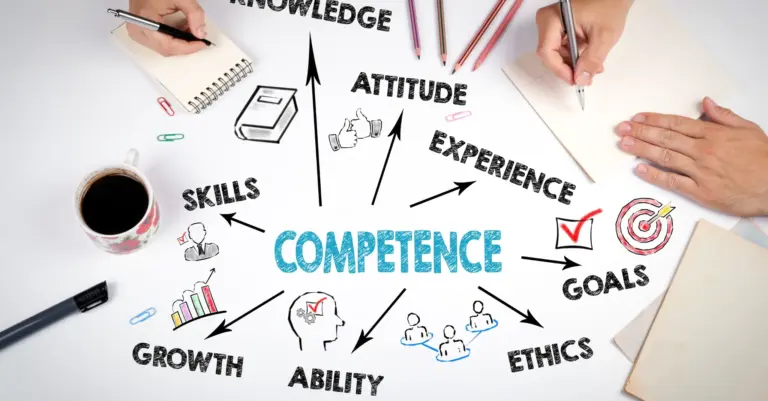
Soft skills are the interpersonal and behavioral abilities that determine how people work with others. They include communication, teamwork, adaptability, emotional intelligence, time management, and leadership. Unlike hard skills, which are technical and job specific, soft skills apply across every role, department, and industry.
The business impact of soft skills is measurable. Research from Harvard University, the Carnegie Foundation, and Stanford Research Center found that 85% of career success comes from well developed soft skills. Only 15% comes from technical knowledge. A study by Boston College, Harvard, and the University of Michigan showed that soft skills training delivers a 256% return on investment. Organizations that build soft skills through a structured learning management system see these results consistently across teams and locations.
Top 10 Soft Skills Every Employee Needs in 2026
Based on the World Economic Forum and LinkedIn data, these are the ten soft skills every organization should train for in 2026.
- Communication. The ability to express ideas clearly in writing, speaking, and presentations. This is the most requested skill in every industry.
- Teamwork. Working effectively with others toward shared goals. Remote and hybrid work has made this skill harder and more important.
- Adaptability. Adjusting to new situations, tools, and priorities without losing productivity. Change is constant in every sector.
- Problem Solving. Identifying issues and finding practical solutions. Employers rank this among the top three skills they need.
- Critical Thinking. Analyzing information objectively to make sound decisions. This skill prevents costly mistakes.
- Leadership. Guiding, motivating, and supporting others. Leadership is not limited to managers. Every team needs informal leaders.
- Time Management. Prioritizing tasks and meeting deadlines consistently. Poor time management is one of the biggest productivity killers.
- Emotional Intelligence. Understanding and managing your own emotions while recognizing others. This drives stronger workplace relationships.
- Conflict Resolution. Handling disagreements constructively without damaging relationships. Unresolved conflict costs organizations time and talent.
- Creativity. Generating new ideas and approaches. Innovation depends on creative thinking across all functions.
Soft Skills vs Hard Skills Key Differences
Hard skills are technical abilities specific to a job. They include coding, accounting, data analysis, machine operation, and language proficiency. You can measure hard skills through tests, certifications, and task performance. They are usually learned through formal education or technical training.
Soft skills are behavioral and interpersonal. They are harder to measure but equally important. A developer who writes excellent code but cannot communicate with the team creates bottlenecks. A sales executive who knows the product but lacks emotional intelligence loses deals. The most effective employee training and development programs combine both hard and soft skills training.
How to Build a Soft Skills Training Program
Building an effective soft skills training program follows five steps.
- Step 1: Identify the gaps. Survey managers and employees. Review performance data. Look for patterns like missed deadlines, client complaints, or team conflicts that point to specific soft skill deficiencies.
- Step 2: Prioritize skills by role. Customer facing teams need communication and emotional intelligence. Managers need leadership and conflict resolution. Technical teams need teamwork and adaptability. Do not train everyone on everything at once.
- Step 3: Design interactive content. Soft skills cannot be learned from slides alone. Use role playing exercises, scenario based videos, group discussions, and real world case studies. Interactive content delivered through LMS features for training keeps learners engaged and improves retention.
- Step 4: Deliver through an LMS. Assign courses by department and role. Set deadlines. Track completion. An LMS makes soft skills training consistent across every office and every employee.
- Step 5: Measure and improve. Use post-training assessments, manager feedback, and behavioral observation to evaluate impact. Adjust content based on what works and what does not.
Soft Skills Training Examples and Activities
Effective soft skills training uses activities that simulate real workplace situations. Here are practical examples.
For communication, use role playing exercises where employees practice giving feedback or presenting to a client. For teamwork, use collaborative problem solving challenges that require groups to work under time pressure. For leadership, use simulation exercises where participants make decisions and manage competing priorities. For conflict resolution, use case studies from real workplace disputes. For emotional intelligence, use self assessment tools followed by group discussions. Organizations can explore soft skills development with LMS for more structured activity ideas.
How an LMS Makes Soft Skills Training Scalable
Delivering soft skills training to 50 employees in one office is manageable. Delivering it to 5,000 employees across ten cities is not, unless you have a system. A cloud based LMS software solves this by centralizing all training content, automating course assignments, and tracking every learner in real time.
With an LMS, you upload interactive modules, assign them based on roles, and set completion deadlines. Employees access training from any device. Managers see progress dashboards. HR teams generate reports showing who completed what. For hybrid and remote teams, a SaaS LMS removes the need for in person workshops at every location. The training content reaches every employee with the same quality. You can explore employee training solutions to see how this works across departments.
Using AlphaLearn for Soft Skills Development
AlphaLearn is an ISO 27001:2022 certified LMS software that supports over 500,000 learners across BFSI, healthcare, retail, manufacturing, and facility management. For soft skills training, AlphaLearn provides automated course assignment by role, interactive content delivery including video and scenario modules, completion tracking with timestamps, certificate generation for training records, and AI-powered course recommendations that personalize learning paths. You can see how organizations use structured training through real-world training case studies.
Whether you are rolling out communication training for a sales team or leadership development for new managers, AlphaLearn scales without adding headcount to your L&D team. New hires receive soft skills modules as part of their onboarding training. Existing employees get ongoing development. You can start your free LMS trial to test the full platform with your own training content.
Why Soft Skills Training is a Business Priority in 2026
Automation and AI are replacing routine tasks. The skills that remain uniquely human are soft skills. Communication, creativity, emotional intelligence, and leadership cannot be automated. They are what separate high performing teams from average ones.
The data supports this. Organizations that invest in soft skills training see 256% ROI, higher employee engagement, better customer satisfaction, and lower attrition. In India, where talent competition is fierce across IT, BFSI, and manufacturing, soft skills training is a retention strategy, a performance driver, and a culture builder. A structured program delivered through a reliable cloud LMS like AlphaLearn gives you the system to make it happen at scale.
Neha Iyer
Learning Experience Designer
Neha specialises in eLearning design, blended learning models, and learner engagement strategy. She brings a learner-first perspective to instructional design, with a focus on mobile-first delivery for deskless workforces.
Get Started
See AlphaLearn in action
500,000+ employees trained. ISO 27001:2022 certified.