Assigning the same courses to everyone is the fastest way to waste your workforce’s time and depress completion rates. A sales rep does not need the same training as a factory supervisor, and a new joiner needs a very different first month from a ten-year veteran. Role-based learning paths solve this by giving each person exactly the training their job requires — automatically, from day one. This guide explains what they are, how to build them, and how Indian enterprises use them to stay compliant and competitive.
What is role-based learning? What is a learning path?
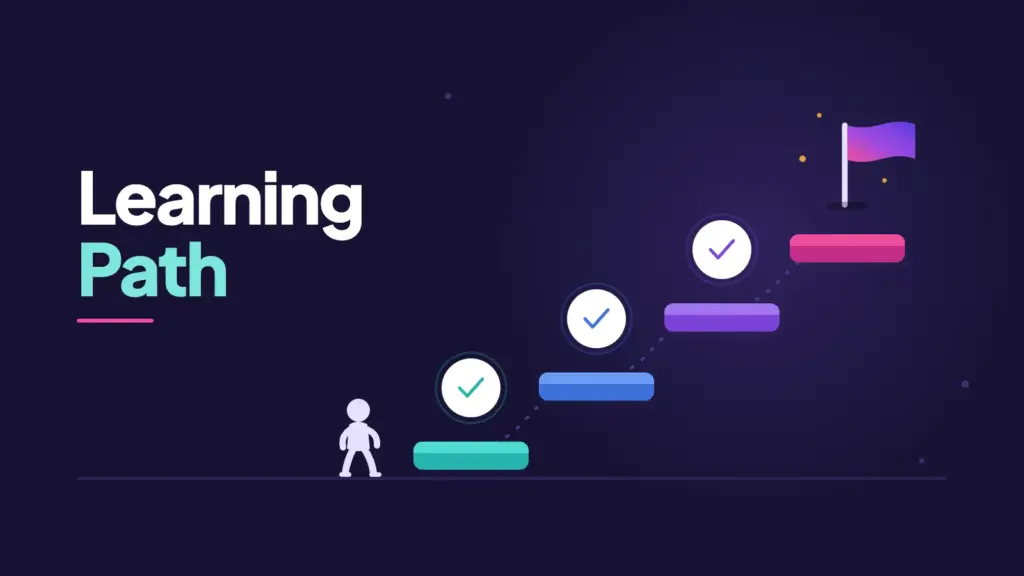
Role-based learning is the practice of assigning training according to a person’s role, department, or seniority, rather than offering one undifferentiated catalogue that every employee must navigate. A learning path is the structure that delivers it: a defined, ordered sequence of courses with a clear beginning, end, and optional prerequisites between modules.
Put the two together and you get a role-based learning path — the right courses, in the right order, for the right person. An L&D manager at a 5,000-person enterprise might maintain 12 to 20 role-based paths covering onboarding, compliance, and skills — far fewer than the number of job titles in the organisation, because roles with similar training needs are grouped together.
Why role-based beats one-size-fits-all
A single catalogue treats a warehouse operator and a compliance officer as if they need the same training. They do not. Tailoring training to the role is not just tidier — it changes the outcomes that matter. Across AlphaLearn’s 200+ enterprise customers, courses delivered via role-based paths consistently outperform open-catalogue assignments on completion rate, assessment scores, and time-to-competency.
- Relevance drives completion: people finish training that clearly applies to their job. Irrelevant courses are ignored, skipped, or rushed through without retention.
- Nothing critical is missed: every role’s mandatory compliance training — POSH, fire safety, GMP, RBI — is built into its path and cannot be bypassed.
- Onboarding is faster: new joiners follow a structured route instead of guessing what to take from a library of hundreds of courses.
- Less noise for learners: employees are not buried under courses that do not concern their role or department.
- Easier to manage at scale: rules assign training automatically — no administrator needs to enrol 500 new joiners by hand each quarter.
- Audit-ready compliance records: because every role’s mandatory training is baked into its path, compliance gaps are visible in real time — not discovered during an inspection.
How learning paths work in an LMS
A learning path in a modern learning management system sequences individual courses into a structured programme. You can set prerequisites so later modules unlock only when earlier ones are complete, mix formats (video, SCORM, live virtual sessions, assessments) into a single blended route, and define a clear completion point that triggers a certificate. The structure is what separates a path from a catalogue: learners always know exactly what is next and how far they have to go.
When a path is tied to a role, the LMS applies assignment rules. The most common rule types are:
- Role or designation: all employees with the designation “Relationship Manager” are assigned the BFSI compliance path.
- Department: everyone in Manufacturing receives the GMP and Factories Act safety path.
- Location: employees at a specific plant or branch receive site-specific SOPs and evacuation procedures.
- Joining date: the onboarding path is triggered on the first day, with day-by-day or week-by-week unlocking.
- Certification expiry: POSH and fire safety certifications auto-renew every 12 months without any manual re-enrolment.
In AlphaLearn, these rules connect directly to your HRMS — Keka, Darwinbox, GreytHR, SAP SuccessFactors, or Workday — so when HR creates or updates an employee record, the correct learning path is assigned within 24 hours, with no L&D team involvement.
How to build role-based learning paths: a 5-step process
Building role-based learning paths does not require a large L&D team or a complex project. The five-step process below works for organisations of 200 to 50,000 employees.
Step 1. Map your roles. List the roles, departments, and levels in your organisation. Keep it practical — group similar jobs where the training is genuinely the same. A bank with 120 job titles might end up with 15 meaningful role groups for training purposes: branch operations, relationship managers, back office, compliance, IT, and so on.
Step 2. Define the competencies each role needs. For every role group, list the knowledge, skills, and mandatory compliance topics required to do the job well and legally. Be specific: “POSH awareness” is clearer than “compliance training,” and “RBI KYC/AML certification” is clearer than “regulatory training.” Mandatory compliance topics are non-negotiable — everything else is prioritised by business impact.
Step 3. Map courses to competencies. Match your existing course library to each competency. Identify gaps — topics with no course — and either build or source content to fill them. This mapping becomes the content of each role’s path. Most organisations discover they already have 70–80% of the content they need; gaps are usually in India-specific compliance topics and role-specific technical skills.
Step 4. Automate assignment. Configure LMS rules so the correct path is assigned the moment a person is added or changes role. Connect to your HRMS for real-time sync. Set renewal triggers for compliance certifications so paths stay live without manual intervention.
Step 5. Track and refine. Monitor completion rates, assessment scores, and time-to-competency by role. Adjust paths where drop-off is consistently high (usually a sign of irrelevant or overlong content) or where assessment scores are low (usually a sign of poor content quality or insufficient time allocation). Conduct a full path review at least annually and whenever a regulation or SOP changes.
Role-based learning vs role-based access
These two terms sound alike and are easy to confuse, especially when evaluating an enterprise LMS. Role-based access controls what a person is allowed to do in the system — an administrator can build and publish courses; a learner can only take them; a manager can view completion reports for their own team. Role-based learning controls what training a person is assigned. They are related but distinct: access is about permissions; learning is about content. A capable LMS gives you both simultaneously — granular access controls for admins, managers, trainers, and learners, and automated role-driven learning assignment for everyone.
Examples of role-based learning paths
The table below shows how role-based paths look in practice for Indian enterprise roles. Each path combines onboarding modules, mandatory compliance training, and role-specific skills — all sequenced and automatically assigned.
| Role | What their learning path includes | Key compliance modules |
|---|---|---|
| New joiner (all roles) | Company induction, code of conduct, POSH awareness, IT security policy, role-specific onboarding — assigned on day one, structured over 30 days | POSH Act 2013, data handling policy |
| Sales representative | Product knowledge, sales enablement, CRM tool training, objection handling — reinforced with gamified challenges and quizzes | POSH, anti-bribery, sector-specific (e.g. IRDAI IC-38 for insurance sales) |
| BFSI compliance-critical roles | KYC/AML, SEBI/RBI/IRDAI regulatory modules, NISM exam prep, product mis-selling prevention | RBI KYC, AMFI, IRDAI IC-38, PFRDA — with expiry-driven annual renewals |
| Pharma / manufacturing shopfloor | GMP induction, SOP sign-off modules, equipment-specific safety, change control training | WHO-GMP, US FDA 21 CFR Part 211, Factories Act safety, CDSCO |
| People manager | Leadership fundamentals, performance conversation skills, team management, POSH IC member training (where applicable) | POSH Act (IC responsibilities), Prevention of Workplace Harassment |
| Frontline / field staff | Safety and SOP training on mobile, available offline in 12 Indian languages — delivered via the AlphaLearn mobile app | Fire safety, BOCW Act (construction), POSH |
| Healthcare (NABH-seeking) | Clinical protocols, infection control, patient safety, documentation standards | NABH training matrix, Biomedical Waste Management Rules |
Role-based learning paths for compliance in India
For Indian enterprises, role-based learning paths are not just an L&D best practice — they are increasingly an audit requirement. Regulators and accreditation bodies expect organisations to demonstrate that the right employees received the right training, on time, with documented proof.
Here is how role-based paths address each major Indian compliance framework:
- POSH Act 2013: All employees must complete annual POSH awareness training. The path assigns the awareness module on joining and triggers renewal every 12 months. Managers and IC members get a separate, deeper path covering their specific obligations under the Act.
- DPDP Act 2023: Employees who handle personal data — HR, IT, customer service, finance — receive data protection training tailored to their access and processing activities. The DPDP module is triggered by department or system-access role.
- GMP (Pharma): Every manufacturing role has a GMP path tied to the specific processes they touch. When an SOP is revised, the updated module is pushed to all affected roles automatically, and re-completion is tracked before the employee resumes work.
- RBI / IRDAI / SEBI (BFSI): Regulatory certification paths — NISM, IC-38, JAIIB — are assigned by designation. Expiry dates are tracked against each employee’s last completion, and renewal paths fire before the certification lapses.
- Factories Act: Safety induction is a prerequisite before any new employee enters a hazardous process area. AlphaLearn’s path logic can enforce this gate — the employee cannot be marked cleared for production until the safety path is complete.
All completion records are stored with timestamps, assessment scores, and digital acknowledgements — formatted for regulator submission via AlphaLearn’s compliance training software.
Measuring role-based learning paths
Because paths are tied to roles, you can measure training at the level where it matters: completion and pass rates by role, time-to-competency for new joiners by department, and compliance status by regulation and business unit. These metrics are far more actionable than aggregate completion rates across the entire organisation.
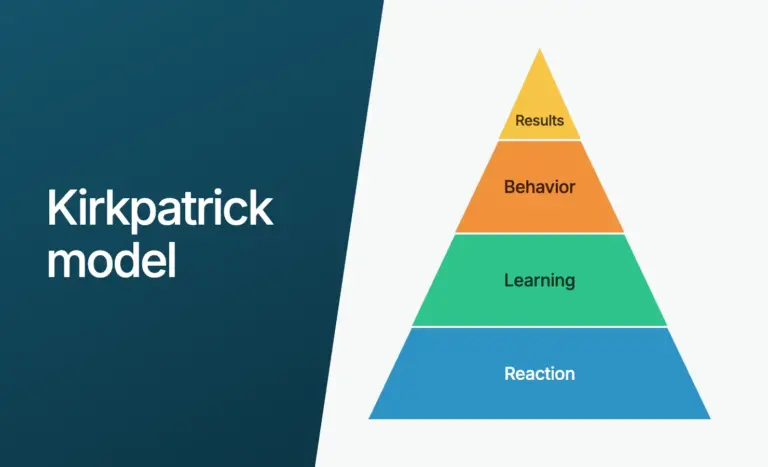
Map your role-based path metrics to the four levels of the Kirkpatrick Model to move from activity data to impact evidence:
- Level 1 — Reaction: satisfaction scores per module within each path. Low satisfaction in a specific role’s path points to content that feels irrelevant or poorly produced.
- Level 2 — Learning: pre/post assessment scores. A role’s path should move the score measurably — if it does not, the content is not building the competency it claims to.
- Level 3 — Behaviour: manager observations, performance review data, or on-the-job assessments 30–90 days after path completion. Did the BFSI relationship manager actually change their KYC documentation behaviour?
- Level 4 — Results: business metrics aligned to the role’s path — sales revenue per rep after sales enablement, audit pass rates after GMP training, POSH complaint rates after awareness training.
For a deeper look at how to build this measurement framework, see our guide to learning analytics for L&D teams.
Common pitfalls when rolling out role-based learning
Role-based learning delivers real gains, but a few common missteps can quietly undermine it.
- Too many micro-roles: if every job title gets its own path, maintenance becomes unmanageable within 12 months. Group roles where the training is genuinely the same — 15 to 25 paths covers most enterprises of up to 10,000 employees.
- Paths that never change: roles evolve and regulations update. The DPDP Act 2023 rules are still being finalised; GMP requirements shift with regulatory guidance. Assign a path owner and build an annual review into your L&D calendar.
- No designated path owner: someone must be accountable for each role’s path — keeping it accurate, removing outdated content, and adding new compliance modules when regulations change. Without ownership, paths become stale and dangerous.
- Forgetting role changes: transfers and promotions are the most common compliance gap in distributed workforces. Without HRMS-connected automation, the employee who moved from teller to relationship manager is still on the wrong path six months later.
- Overlong paths: a path with 30 courses will not get finished. Sequence the mandatory and high-priority modules as required; make supplementary development content optional or recommended rather than compulsory.
Role-based learning paths in AlphaLearn
AlphaLearn’s employee training software assigns learning paths automatically using rules based on role, department, location, or joining date — so new joiners are enrolled on day one and role changes trigger the right reassignments without any L&D team intervention. HRMS integrations with Keka, Darwinbox, GreytHR, SAP SuccessFactors, and Workday keep paths in sync with your current org structure in real time.
Key capabilities relevant to role-based paths:
- Prerequisite locking — learners cannot skip ahead until earlier modules are complete
- Blended path support — mix SCORM, video, live virtual sessions, and assessments in one path
- Certification expiry and auto-renewal — compliance certifications fire renewals on a configurable schedule
- Offline mobile delivery — frontline and field staff complete path modules without internet via the iOS and Android app
- 12 Indian language support — path content available in Hindi, Tamil, Telugu, Marathi, Gujarati, Bengali, and more
- Real-time role-level dashboards — L&D managers see completion, scores, and compliance gaps by role and department
See how it works on the AlphaLearn features page, explore the enterprise LMS for large-organisation specifics, or read about the operations training solution for manufacturing and logistics teams.
Key takeaways
- Role-based learning paths deliver the right courses, in the right order, to the right people — automatically.
- They lift completion, guarantee compliance coverage, and reduce time-to-competency for new joiners.
- Build them in five steps: map roles, define competencies, map courses, automate assignment, then track and refine.
- Role-based learning (assigned content) is distinct from role-based access (permissions) — a capable LMS handles both.
- For Indian enterprises, role-based paths are the most reliable way to ensure POSH, DPDP, GMP, RBI, and Factories Act compliance is documented for every role, on time, every year.
Ready to give every employee a learning path built for their role? Book a demo of AlphaLearn, or start a free 14-day trial.
Frequently asked questions
What is a role-based learning path?
A role-based learning path is a defined sequence of courses assigned to an employee based on their role, department, or level. It gives each person exactly the training their job requires — onboarding, compliance, and skills — rather than a single catalogue everyone must navigate. In a modern LMS, these paths are assigned automatically by rules tied to role or department.
How is a learning path different from a course catalogue?
A catalogue is a library learners browse; a learning path is a curated, ordered route through specific courses. Paths add sequence and structure — prerequisites, module unlocking, and a clear finish line — so learners know exactly what to complete and in what order. This structure is what lifts completion rates: learners are not choosing, they are progressing.
What is the difference between role-based learning and role-based access?
Role-based access controls what a person can do in the LMS — an admin can build and publish courses; a learner can only take them. Role-based learning controls what training a person is assigned. They are related but distinct: access is about system permissions; learning is about content assignment. A good LMS supports both simultaneously.
Can role-based learning paths be assigned automatically?
Yes. In a modern LMS, automation rules assign the correct path based on role, department, location, or joining date — so a new joiner is enrolled in their onboarding and compliance path on day one, with no manual work. When someone changes roles, rules reassign their training automatically. AlphaLearn’s HRMS integrations keep these rules in sync with live org chart data from Keka, Darwinbox, SAP SuccessFactors, and others.
How do you handle training when someone changes roles?
Automation rules tied to role or department trigger reassignment when an employee moves roles: they are enrolled in the new role’s path and, where appropriate, removed from training that no longer applies. This keeps every employee’s learning aligned with their current job without administrators tracking changes manually. For compliance-critical roles in BFSI or pharma, this automation is essential — a missed reassignment can mean a compliance gap the next time a regulator audits.
Priya Sharma
L&D Specialist
Priya has 9 years of experience designing corporate training programmes for BFSI and retail organisations across India. She specialises in onboarding, soft skills, and building learning cultures that actually stick.
Get Started
See AlphaLearn in action
500,000+ employees trained. ISO 27001:2022 certified.