
For a bank, a pharmaceutical manufacturer, or any regulated business in India, training is not optional – it is a legal obligation. A single gap in mandatory training can trigger regulatory penalties, failed audits, or reputational damage that takes years to repair. Yet most organisations still manage compliance training with attendance sheets, email reminders, and spreadsheets that fall apart the moment an auditor arrives and asks for proof.
Compliance training software exists to close that gap permanently. It automates delivery, tracks every completion, enforces deadlines, and produces audit-ready reports in seconds – not days.
This guide explains what compliance training software does, why Indian enterprises in BFSI, pharma, manufacturing, and healthcare depend on it, which features matter most, and how to select the right platform for your organisation.
Why Compliance Training Matters More in India Right Now
Indian organisations operate under an expanding web of regulatory compliance obligations that have grown significantly stricter over the past three years. Each sector faces its own mandatory training requirements – and the penalties for non-compliance are escalating.
- POSH Act (2013): Every organisation with 10 or more employees must conduct annual anti-sexual-harassment training and maintain auditable attendance records. Failure to comply can result in penalties up to ₹50,000 and the cancellation of business licences.
- RBI / SEBI / IRDAI: Banking, securities, and insurance firms must train all relevant staff on anti-money-laundering (AML), Know Your Customer (KYC), code-of-conduct, and cybersecurity policies. The RBI’s Master Directions on KYC (updated 2023) and SEBI’s PMLA guidelines require documented training completion records for inspection.
- Pharmaceuticals – Schedule M (GMP): The Central Drugs Standard Control Organisation (CDSCO) mandates that pharma manufacturers demonstrate Good Manufacturing Practice (GMP) and SOP training for every employee involved in production, quality, and packaging – before they handle any process and after every SOP revision.
- DPDP Act 2023: The Digital Personal Data Protection Act requires organisations handling personal data to train employees on data handling obligations and breach prevention. This applies to every company collecting customer or employee data digitally.
- Factories Act & BOCW Act: Manufacturing and construction firms must conduct periodic workplace safety and health training for all shop-floor and site workers, with records available for Labour Department inspections.
In every case, the regulator does not just want the training to happen – it wants proof that it happened, for every named employee, on a specific date, with a score where relevant. Manual spreadsheets cannot deliver that proof reliably across thousands of employees spread across multiple cities and languages. That is the core problem compliance training software solves.
What Compliance Training Software Actually Does
A compliance training platform – most often delivered as a cloud-based learning management system (LMS) – handles the complete lifecycle of mandatory training automatically:
Automated Enrolment
New joiners are auto-enrolled in the right compliance courses the moment their profile is created – based on role, department, branch, or location. A teller at a BFSI branch in Pune receives the same AML course as one in Chennai, without HR manually assigning anyone.
Deadline Enforcement and Escalation
The system sends automated reminders at configurable intervals (14 days, 7 days, 3 days, due date). If an employee misses the deadline, an escalation is sent to their manager – without a single manual email from the compliance team.
Recurring Re-Certification
Compliance is not a one-time event. When a certificate is about to expire – whether that is 11 months after annual POSH training or 6 months after a GMP refresher – the course is automatically reassigned. No employee goes out of compliance because someone forgot to create a calendar reminder.
Assessment and Certification
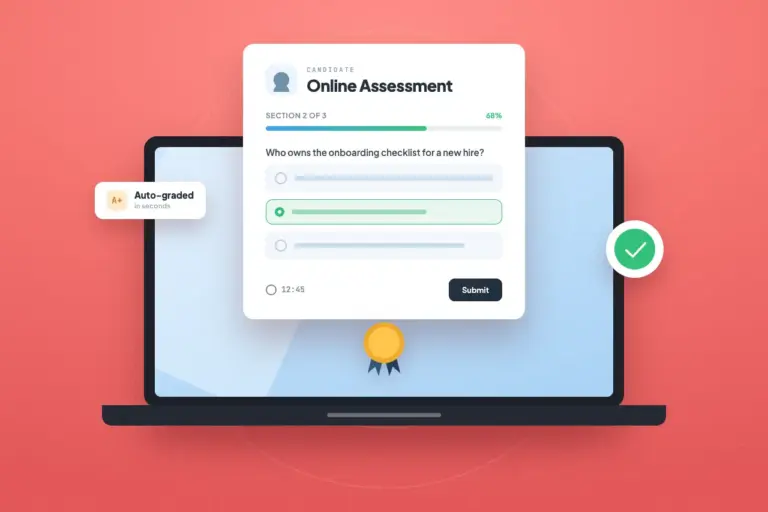
Built-in quizzes confirm that employees understood the content, not just clicked through it. Pass marks are configurable per course. Certificates are generated automatically on passing and stored permanently in the employee’s learning record.
Audit-Ready Reporting
A single dashboard shows completion status by employee, team, branch, department, course, and date range – exportable as PDF or Excel in the format auditors expect. When an RBI inspector or CDSCO auditor arrives, the compliance manager produces the complete record in under two minutes.
Common Types of Compliance Training in Indian Enterprises
Compliance training requirements vary by sector, but the following programmes are mandatory or near-mandatory for most large Indian enterprises:
| Compliance Area | Who Needs It | Regulatory Basis | Frequency |
|---|---|---|---|
| POSH / Anti-Sexual Harassment | All employees (10+ headcount) | POSH Act 2013 | Annual |
| Anti-Money Laundering (AML) & KYC | BFSI staff handling accounts / transactions | RBI Master Directions, PMLA 2002 | Annual |
| GMP / SOP Training | Pharma production, QA, packaging staff | CDSCO Schedule M | On joining + on SOP change |
| Data Privacy (DPDP Act) | All data-handling employees | DPDP Act 2023 | Annual |
| Cybersecurity Awareness | All employees with IT access | RBI / SEBI cybersecurity frameworks | Annual |
| Workplace Safety (EHS) | Manufacturing, field, construction staff | Factories Act 1948, BOCW Act | Periodic / on process change |
| Anti-Bribery & Anti-Corruption | BFSI, large enterprises, listed companies | Prevention of Corruption Act | Annual |
| Code of Conduct | All employees | Internal policy / SEBI LODR | On joining + annual |
For a detailed guide on one of the most commonly audited programmes in Indian workplaces, read our article on POSH training for Indian enterprises.
Key Benefits of Compliance Training Software
Provable Compliance on Demand
Audit-ready records are available at any time – not assembled in a panic when an inspector arrives. Every completion is time-stamped, tied to a named employee, and linked to the course version they completed. This is particularly important for ISO 27001:2022 audits and CDSCO GMP inspections, where training records are a mandatory evidence category.
Reduced Legal and Financial Risk
Documented training is your strongest defence if an incident, complaint, or regulatory action arises. Courts and regulators distinguish between organisations that can demonstrate a genuine, systematic training programme and those that cannot. The difference can be the outcome of a POSH complaint inquiry or the renewal of a pharma manufacturing licence.
Dramatic Time Savings for HR and Compliance Teams
A compliance manager at a 2,000-person organisation can spend 15–20 days per year manually tracking training completion, chasing managers, and compiling audit reports. Compliance training software compresses that to a few hours of dashboard review – freeing the team for programme improvement rather than administration.
Consistency Across Locations and Languages
Every branch, plant, and regional office receives the same approved content, delivered in the employee’s preferred language. AlphaLearn supports 12 Indian languages including Hindi, Tamil, Marathi, Bengali, Gujarati, Kannada, Telugu, and Malayalam – critical when your frontline workforce in Gujarat speaks a different language from your plant in Tamil Nadu.
Real-Time Visibility for Leaders
Compliance dashboards show live completion rates – not end-of-quarter summaries. A plant manager can see that 94% of production staff have completed the revised GMP SOP module, with the remaining 6% flagged by name for follow-up, before the CDSCO auditor walks in.
These outcomes are closely connected to the broader benefits of a learning management system – compliance automation is often the use case that delivers the fastest, most measurable return on LMS investment.
Manual Compliance Tracking vs. Compliance Software: A Direct Comparison
The difference is most visible during an audit. With manual tracking, the compliance team spends days collating attendance registers, chasing managers for missing signatures, and reconciling spreadsheets built for a different purpose. Inevitably some records are incomplete – an employee who attended a classroom session but whose name was missed on the sheet, a digital certificate that was emailed but not archived. The organisation is exposed.
With compliance software, the same evidence is produced in under five minutes: a complete, time-stamped record of every employee, every course version, every assessment score, and every certificate – filterable by branch, department, role, or date range, and exportable for the auditor’s specific format requirements.
Beyond audits, there is a cultural difference. Manual compliance feels like an annual fire drill. Automated compliance becomes a continuous background process: new joiners are enrolled on day one, refreshers trigger automatically before certificates expire, and managers receive a weekly digest of their team’s compliance status without the compliance team doing anything manually.
Compliance Training for Specific Indian Industries
BFSI (Banking, Financial Services & Insurance)
BFSI is the most heavily regulated sector for training in India. Banks must demonstrate AML, KYC, cybersecurity, and code-of-conduct training to the RBI. Insurance companies face IRDAI-mandated training for agents and underwriters. Securities firms must comply with SEBI PMLA guidelines. All of this requires documented completion at the individual employee level. Learn more about LMS for BFSI organisations and how compliance automation works in this sector.
Pharmaceutical and Life Sciences
GMP compliance under CDSCO Schedule M requires that every employee who touches production, quality, or packaging be trained on current SOPs – and re-trained whenever an SOP is revised. A pharma manufacturer running 50 SOPs across three plants cannot manage this manually. Compliance software tracks training against specific SOP versions, so the audit trail shows not just who was trained, but which document version they were trained on. See our guide to LMS for pharmaceutical companies.
Healthcare
Hospitals and diagnostic chains must train clinical and administrative staff on NABH standards, patient safety protocols, and infection control procedures – all with dated completion records. A healthcare LMS with compliance automation ensures every department maintains its training currency without the manual overhead of a dedicated training coordinator per ward.
Manufacturing
Factories Act and environment, health & safety (EHS) regulations require documented safety training for all shop-floor workers. A mobile-first compliance platform is essential here – most production staff do not have desktop access and need to complete training on a shared tablet or personal mobile in their native language.
5 Common Compliance Training Mistakes Indian Enterprises Make
1. Treating Completion as Understanding
A 100% completion rate on a module that employees clicked through in four minutes is not compliance – it is a liability waiting to surface. Pairing content with a minimum-pass-mark assessment ensures the record reflects actual understanding, not just screen time.
2. Ignoring Language
Delivering a POSH policy in English to a workforce whose primary language is Tamil or Kannada creates a compliance gap even when the report shows green. Effective compliance requires content in the employee’s first language – not a translation footnote in the appendix.
3. No Recurring Re-Certification
Training completed in January 2023 does not satisfy a 2025 annual training requirement. Many organisations discover this gap during audits when a regulation requires annual documented training but their records show a single completion two years ago. Automated re-certification schedules eliminate this entirely.
4. One Course for All Roles
Pushing a 45-minute generic compliance module to every employee – from the receptionist to the CFO – wastes time and reduces engagement. Role-based assignment means the plant manager gets the EHS leadership module, production staff get the SOP-specific training, and the finance team gets the anti-bribery programme.
5. No Escalation Path
If the only consequence of ignoring a training deadline is another email reminder, non-compliance rates climb. Effective platforms escalate overdue cases to managers and, where required, restrict system access or flag the employee in HR records until training is completed.
How to Choose Compliance Training Software in India
When evaluating platforms, assess these criteria in order:
- India-specific compliance content: Does the platform include pre-built courses for POSH, AML, DPDP Act, GMP, and workplace safety? Building from scratch takes months – pre-built courses deployed and customised in days.
- Automated recurring re-certification: Can the system automatically reassign courses when certificates are nearing expiry, without manual intervention?
- Role- and branch-based assignment: Can you assign different compliance programmes to different roles, departments, locations, or employment types (permanent, contractual, third-party)?
- Multi-language delivery: Does it support the Indian languages your workforce actually uses – not just English and Hindi?
- Mobile-first access: Can frontline and deskless workers complete training on a mobile device without a corporate email account? See AlphaLearn’s mobile learning app for how this works in practice.
- Data security and sovereignty: Is the platform ISO 27001:2022 certified? Is data hosted in India (AWS Mumbai region) to comply with data localisation requirements under the DPDP Act?
- Audit reporting: Can you export completion records in the format your auditors (CDSCO, RBI, SEBI, NABH) expect – by employee, role, course, branch, and date?
- Integration with HRMS: Does the platform sync with your HR system (SAP, Keka, Darwinbox, Workday) so new joiners are auto-enrolled on day one and leavers are removed automatically?
The best way to validate these criteria is not a vendor demo – it is a free trial using your own compliance courses and your actual organisational structure. Run a pilot with one department, measure the completion rate and reporting accuracy, then decide.
For a broader view of LMS capabilities beyond compliance, see our full features overview.
Frequently Asked Questions About Compliance Training Software
What is compliance training?
Compliance training is mandatory education that teaches employees the laws, regulations, and internal policies relevant to their role. In India, this includes programmes mandated by the POSH Act, RBI, SEBI, IRDAI, CDSCO, the Factories Act, and the DPDP Act 2023. The goal is to ensure the organisation meets its legal obligations and reduce the risk of violations, penalties, and failed audits.
What is compliance training software?
Compliance training software is a platform – most commonly a cloud-based LMS – that delivers mandatory training online, automatically tracks who has completed it, sends reminders and escalations for overdue employees, manages recurring re-certification, and generates audit-ready completion reports. It replaces manual spreadsheets and email-based tracking with an automated, always-current system of record.
Is compliance training legally required in India?
Yes, for many programmes across all major sectors. The POSH Act (2013) requires annual anti-harassment training and records for all employers with 10 or more employees. CDSCO mandates GMP and SOP training for pharma production staff. The RBI, SEBI, and IRDAI require documented training on AML, KYC, cybersecurity, and code of conduct for BFSI employees. The DPDP Act 2023 requires data privacy training for staff handling personal data. Non-compliance can result in penalties, licence suspension, or adverse regulatory action.
How often should compliance training be conducted?
It varies by programme. POSH, code of conduct, AML, KYC, data privacy, and cybersecurity training are typically required annually. GMP and SOP training must be completed on joining and repeated whenever the relevant SOP is revised – which in an active pharma facility may be multiple times per year. Workplace safety training frequency depends on the Factories Act schedule for the specific activity. Good compliance software automatically re-assigns courses based on certificate expiry dates, so no manual scheduling is needed.
Can compliance training be delivered to frontline and deskless workers?
Yes. A mobile-first compliance platform lets frontline, field, and deskless employees complete mandatory training on their smartphones – in their preferred language – with the same automated tracking and certification as office-based staff. This is essential for manufacturing plants, hospital wards, bank branches, and logistics operations where most employees do not work at a computer.
What is the difference between a compliance LMS and a general LMS?
A general LMS focuses on learning delivery and engagement. A compliance LMS adds specific enforcement capabilities: mandatory completion deadlines with escalation paths, automatic re-certification scheduling, version-controlled course assignments (so the system tracks which document version an employee was trained on), and audit-export reporting formatted for regulatory inspectors. AlphaLearn is built to do both – full LMS capabilities plus the compliance-specific features Indian regulated enterprises require.
How long does it take to implement compliance training software?
A cloud-based compliance LMS can typically be configured and deployed within 2 to 5 business days for a standard implementation – user data imported from HRMS, compliance courses uploaded or selected from a pre-built library, assignment rules configured by role and branch, and the first training cycle launched. AlphaLearn’s implementation support team handles this end-to-end, with dedicated onboarding for enterprise customers.
Does compliance training software integrate with SAP or other HRMS?
Yes. AlphaLearn integrates with major HRMS platforms used in Indian enterprises, including SAP SuccessFactors, Keka, Darwinbox, Workday, and Oracle HCM – via REST API or flat-file sync. New joiner data triggers automatic compliance enrolment; leaver data deactivates access and freezes the training record for audit purposes.
Priya Sharma
L&D Specialist
Priya has 9 years of experience designing corporate training programmes for BFSI and retail organisations across India. She specialises in onboarding, soft skills, and building learning cultures that actually stick.
Get Started
See AlphaLearn in action
500,000+ employees trained. ISO 27001:2022 certified.